
Fiber Cement Siding vs. Wood Siding: Which Is Better for Your Home?
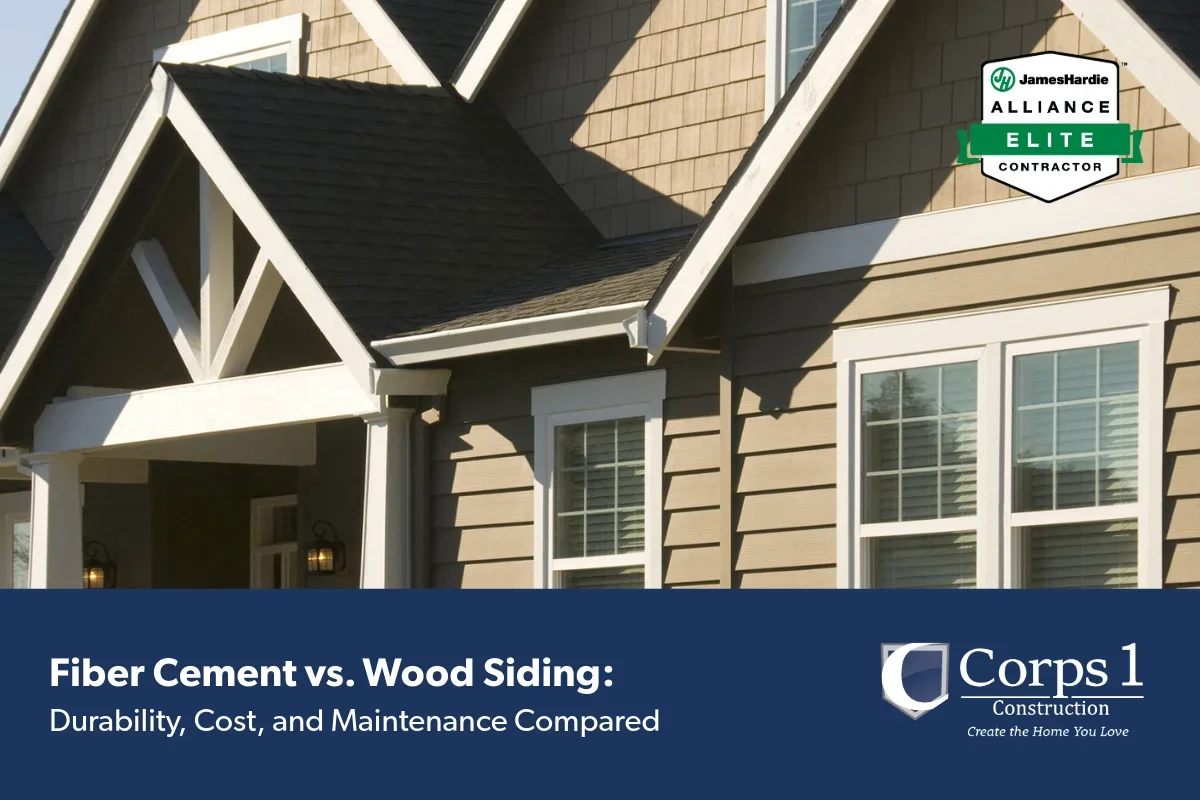
When choosing new siding for your home, homeowners may consider two options: fiber cement siding and traditional wood siding. Both can create an attractive exterior, but they differ significantly in durability, maintenance, pest resistance, fire resistance, and long-term cost.
For homeowners in Columbus and Central Ohio, these differences matter. Our homes experience hot summers, freezing winters, rain, snow, ice, and significant temperature swings throughout the year.
At Corps 1 Construction, we install multiple types of exterior products, so this comparison isn’t meant to tell every homeowner there is only one correct choice. Instead, we want to explain the advantages and disadvantages so you can determine which siding makes the most sense for your home.
When discussing fiber cement siding, we’ll focus primarily on James Hardie® siding, the leading name in fiber cement siding in North America.
Corps 1 Construction is also an Elite Certified James Hardie Installer, giving our team extensive experience installing James Hardie siding systems on homes throughout Central Ohio.
What Is Fiber Cement Siding?
Fiber cement siding is an engineered exterior siding material generally made from a combination of cement, sand, cellulose fibers, and water.
Unlike wood siding, fiber cement is designed to provide the appearance and architectural character homeowners often associate with wood while offering greater resistance to conditions that can damage natural wood.
James Hardie is the best-known manufacturer in this category and offers several siding profiles and architectural styles, including products designed to resemble traditional lap siding, shingles, and vertical siding.
This lets homeowners achieve many of the looks associated with wood without accepting the same maintenance requirements.
What Is Wood Siding?
Wood siding is exactly what the name suggests: exterior cladding manufactured from natural wood.
Depending on the home and desired appearance, wood siding can include cedar, pine, redwood, engineered profiles, clapboard, shingles, and other styles. The authenticity of your wood siding may matter most for certain historic homes or architectural styles where maintaining the property's original character is a priority. That natural material, however, also creates some of wood siding’s biggest disadvantages.
Wood is organic. It can absorb moisture, rot, become a food source for certain pests, and require ongoing painting, staining, sealing, and repair.
Fiber Cement vs. Wood Siding
| Category | James Hardie Fiber Cement | Wood Siding |
|---|---|---|
| Durability | Excellent | Good with proper maintenance |
| Moisture/Rot Resistance | Excellent | Requires careful maintenance |
| Pest Resistance | Excellent | More vulnerable |
| Fire Resistance | Noncombustible | Combustible |
| Maintenance | Lower | Higher |
| Appearance | Wide variety of wood-look styles | Authentic natural wood |
| Painting/Staining | Less frequent maintenance | Regular maintenance generally required |
| Initial Cost | Premium siding product | Varies significantly by wood species and design |
| Long-Term Ownership | Lower maintenance can provide an advantage | Maintenance costs should be considered |
| Best For | Durability and lower maintenance | Homeowners prioritizing genuine wood |
1. Durability: Fiber Cement vs. Wood
James Hardie siding is engineered for exterior exposure and designed to resist damage from weather, moisture, and other environmental conditions. This can be particularly valuable in Ohio’s four-season climate.
Wood siding can also last for many years. Some homes with wood siding have performed extremely well for decades. The important distinction is maintenance.
Wood generally requires more homeowner involvement to maintain that durability. Address peeling paint, cracked caulk, failed coatings, and areas where water can penetrate before they become bigger problems.
With wood siding, deferred maintenance can become expensive.
Advantage: James Hardie Fiber Cement
For homeowners who prioritize long-term durability without wanting the maintenance associated with natural wood, fiber cement generally has the advantage.
2. Pest Resistance
Natural wood can be vulnerable to termites, carpenter ants, woodpeckers, and other insects or animals that attack or damage wood products. Moisture-damaged wood can make these problems worse.
James Hardie fiber cement siding is not a food source for pests in the same way natural wood is. The material is specifically designed to resist pest damage. For homeowners concerned about termites or recurring woodpecker damage, this can be a significant advantage.
Advantage: James Hardie Fiber Cement
Fiber cement provides much better resistance to the pests that can damage natural wood siding.
3. Fire Resistance
Wood is combustible while fiber cement is not. James Hardie siding will not ignite when exposed to a direct flame. That doesn’t mean installing fiber cement makes a house fireproof. Many other components of a home can still burn. However, when comparing the siding materials themselves, fiber cement offers a clear advantage over natural wood in fire resistance.
Advantage: James Hardie Fiber Cement
With its exterior fire resistance, fiber cement is the clear winner between these two materials.
4. Maintenance
Maintenance is where homeowners should consider more than just what their siding looks like immediately after installation. Wood siding can look exceptional with proper maintenance. But maintaining that appearance generally requires ongoing work.
Depending on the wood, finish, and exposure, maintenance can include:
Painting or staining
Sealing
Caulking
Replacing damaged boards
Repairing rot
Addressing insect damage
Monitoring areas exposed to moisture
James Hardie siding is designed to require significantly less ongoing maintenance. That doesn’t mean fiber cement siding is completely maintenance-free. Homeowners should still inspect siding, maintain caulking where appropriate, keep gutters functioning correctly, and address any exterior damage. But the ongoing maintenance requirements are generally considerably lower than natural wood.
Advantage: James Hardie Fiber Cement
If reducing exterior maintenance is a priority, fiber cement is generally the better choice.
5. Appearance
This category is much more subjective. For certain historic homes, custom residences, or homeowners who specifically want natural materials, wood siding may be exactly the right choice. James Hardie, however, offers homeowners many design options while creating the traditional look associated with wood siding.
Options can include:
HardiePlank® lap siding for a traditional horizontal siding appearance.
HardieShingle® siding for a cedar-shake-inspired appearance.
HardiePanel® vertical siding for vertical designs, including modern and board-and-batten-inspired exteriors.
HardieTrim® boards for windows, doors, corners, fascia, and other architectural details.
This allows us to create a highly customized exterior without relying on natural wood as the primary siding material.
Advantage: Depends on Your Priorities
Natural wood is authentic but requires more maintenance, while James Hardie offers a natural-wood look with greater durability and lower maintenance. We recommend James Hardie as the better investment, but the best option for your home depends on what matters most to you: authenticity or durability.
6. Cost: Wood Siding vs. James Hardie
Cost requires a little more explanation because wood siding prices can vary dramatically.
The type of wood, siding profile, grade, finish, house design, removal requirements, trim details, and labor requirements can all significantly affect the final price. For that reason, homeowners should be careful when comparing simple “cost per square foot” numbers found online.
At Corps 1 Construction, we prefer to look at the entire project.
Based on the pricing ranges we’ve previously used to help Central Ohio homeowners understand siding costs, a typical James Hardie project may fall into approximately these ranges:
| Approximate Home Size | Estimated James Hardie Project Cost |
|---|---|
| 1,200–1,500 sq. ft. | $24,000–$33,000 |
| 1,800–2,200 sq. ft. |
$49,500–$55,000 |
| 2,500–3,000 sq. ft. | $62,500–$75,000 |
These are estimated ranges, not quotes. The actual siding area of the house, not simply the home’s interior square footage, along with architectural complexity, trim, demolition, sheathing repairs, and product selections will determine the actual project price.
Wood siding can fall below, within, or above these ranges depending on the wood species and installation. More importantly, homeowners comparing wood with fiber cement should consider long-term cost, not simply installation cost. A wood siding project that requires repeated painting, staining, repairs or replacement of damaged boards can create additional ownership costs over the life of the siding.
James Hardie’s reduced maintenance requirements can therefore become an important part of the overall value equation.
Don’t Overlook the Importance of Installation
Even premium siding can perform poorly if it isn’t installed correctly. Fiber cement siding is not simply a matter of removing old siding and nailing new boards onto the house.
A complete exterior siding system can involve:
Proper weather-resistant barriers
Window and door flashing
Kickout flashing
Roof-to-wall transitions
Clearances from roofs, decks, and concrete
Correct fastening
Proper siding exposure
Correct joint installation
Flashing above horizontal trim
Proper corner and trim installation
Water-management details
These details are extremely important.
Water that gets behind siding must have a properly designed path to drain away from the structure.
This is one reason the installer you select can be just as important as the siding product you select.
Why James Hardie?
James Hardie has become the leading name in fiber cement siding because the company has built an entire siding system around durability, appearance, and performance.
For homeowners comparing siding materials, some of the biggest reasons to consider James Hardie include:
Resistance to moisture and rot
Resistance to pests
Noncombustible fiber cement construction
Lower maintenance compared with natural wood
Multiple architectural styles
Extensive color and design options
The appearance of traditional siding without many of wood’s vulnerabilities
Why Choose a James Hardie Elite Certified Installer?
Corps 1 Construction is proud to be an Elite Certified James Hardie Installer.
Elite status represents a high level within James Hardie’s contractor program and demonstrates significant experience working with James Hardie products.
For homeowners, choosing an experienced James Hardie contractor matters because fiber cement installation has specific requirements for flashing, clearances, fastening, joints, trim, and water management. We view the exterior as a complete system designed to protect the structure underneath.

Fiber Cement or Wood: Which Should You Choose?
If your primary goal is having genuine natural wood, and you’re comfortable with the maintenance that comes with it, wood siding can provide an appearance that is difficult to duplicate.
If your priorities include durability, pest resistance, fire resistance, and reduced maintenance, fiber cement deserves serious consideration.
For many Central Ohio homeowners who like the look of wood but don’t want the maintenance, James Hardie offers an attractive middle ground: traditional architectural character combined with the performance of fiber cement.
Thinking About Replacing Your Siding in Central Ohio?
If you’re researching fiber cement siding, wood siding, James Hardie siding, or siding replacement in Columbus, Ohio, Corps 1 Construction can help you compare your options.
We’ll evaluate your existing exterior, discuss the appearance you’re trying to achieve, and help you understand the differences between available siding systems.
As an Elite Certified James Hardie Installer, we can also walk you through James Hardie siding styles, trim options, colors, and installation details so you understand exactly what you’re buying before you decide.
The goal isn’t simply to sell you siding.
It’s to help you choose an exterior system that makes sense for your home, your budget, and how much maintenance you want to deal with in the years ahead.
Contact Corps 1 Construction to schedule a siding consultation and learn whether James Hardie fiber cement siding, wood siding, or another exterior siding option is right for your Central Ohio home.
